
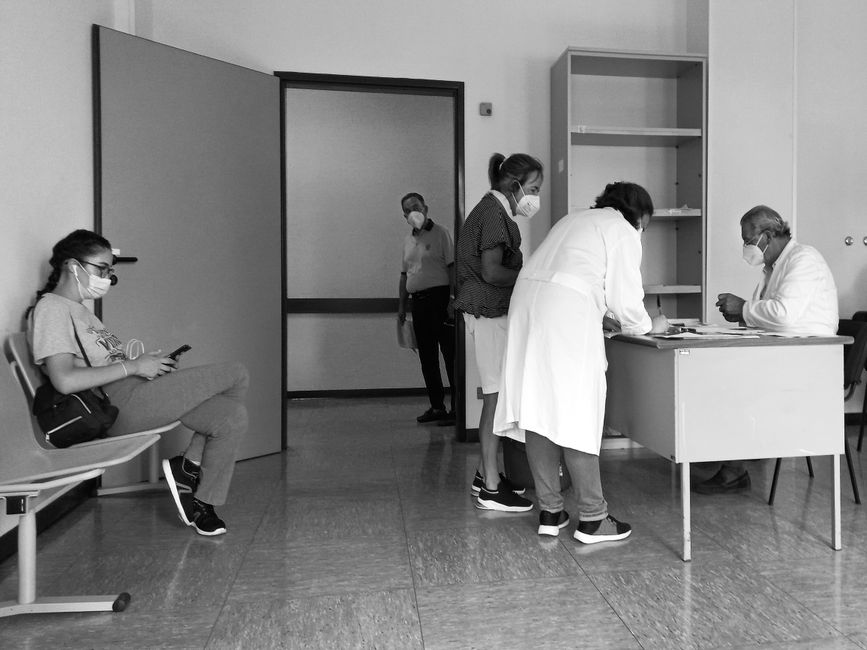
Paper brochures fail uninsured patients because they freeze clinic information in place and leave the hardest work to the reader: checking cost, eligibility, language, hours, and distance. Modern outreach must put current, phone-ready care options into the tools people already use, while protecting privacy and giving each person a clear next step.
In 1854, physician John Snow faced a similar information problem in Soho, London. Cholera deaths were mounting, and the prevailing explanation blamed contaminated air. Snow plotted deaths around the Broad Street water pump, turning scattered records into a visible pattern. His investigation helped persuade local officials to remove the pump handle, though the epidemic was already declining by then. Steven Johnson documents the investigation and its limits in The Ghost Map.
Snow did more than distribute health information. He connected information to place, made the pattern usable, and pointed to an action.
That distinction matters for anyone trying to reach people without insurance.
A brochure leaves the reader with another research project
A clinic brochure can announce that help exists. It usually cannot tell someone whether the clinic accepts uninsured patients, offers sliding-scale fees, takes Medicaid, speaks Spanish, or is close enough to reach.
Those questions decide whether a person calls.
Picture someone in Houston searching on a low-cost Android phone because their throat hurts and they cannot afford an unexpected bill. A brochure rack across town offers no help at that moment. Even a photographed brochure shared online may contain an old phone number, changed hours, or a general description that says nothing about cost.
The reader must then search for the clinic, compare several pages, call during a break, and explain the situation repeatedly. Every extra step creates another chance to stop.
A stronger outreach message carries enough practical detail to support action:
- Show the address, distance, and a phone number that can be tapped to call.
- State whether uninsured access, sliding-scale fees, Medicaid, and Spanish are confirmed or unknown.
- Show where the information came from and when it was updated.
- Encourage people to call ahead because clinic details can change.
- Let them report incorrect information.
The goal is not more content. The goal is fewer unanswered questions between “I need care” and “I can call this place.”
Privacy belongs at the start of outreach
People who are uninsured may also worry about paperwork, immigration questions, account creation, or being asked for information before they know whether help is available. Hiding the privacy explanation inside a policy page does little to reduce that fear.
Say the important part where the decision happens: no account required, no immigration questions, and only a ZIP code needed to search.
This changes the first step from “tell us who you are” to “tell us where you need care.” It lowers the effort required to begin and gives the person something useful before asking for commitment.
The same principle should shape outreach from community health workers and free-clinic teams. A QR code on a flyer can open a ZIP-code search instead of a registration form. A text message can lead to a shareable care plan instead of a general homepage. A navigator can send two or three relevant clinic options rather than a directory with hundreds of entries.
For someone looking for help at night or between shifts, finding care without sharing personal information may be the difference between continuing and closing the page.
Current information builds more trust than polished information
A glossy brochure can look official while carrying stale details. Clinic information changes: phone numbers, hours, services, and availability can all move faster than a print cycle.
Digital outreach should make uncertainty visible. A source label and freshness date give the reader a reason to trust the listing without pretending it is permanent. Verified Google Places matching can add current hours or a permanently closed status where available. A correction button creates a route for patients and navigators to flag changes.
That feedback loop matters because successful outreach continues after the first click. Did the person reach the clinic? Was the number correct? Did the clinic accept the coverage listed? What should be corrected before the next referral?
This is why a phone number, data source, freshness date, and what-to-bring checklist provide more value than a long directory.
Give people one action they can take now
Modern outreach should work under stress on a small screen. Keep the language plain. Put one task on each screen. Offer English and Spanish throughout the experience. Route urgent warning signs through fixed emergency rules before any AI system is involved.
Then make the next action concrete: call this clinic, compare these nearby options, bring these items, or share this plan with someone helping you.
John Snow’s map became useful because it joined records to a location and a decision. Outreach for uninsured care needs the same discipline. Before printing the next brochure, turn its QR code into a ZIP-code search, test it on an inexpensive phone, and confirm that the first clinic result includes a callable number, its source, and an update date.
Comments
No comments yet.